What Is a Smart Tachograph? Features, Benefits and EU Deadlines
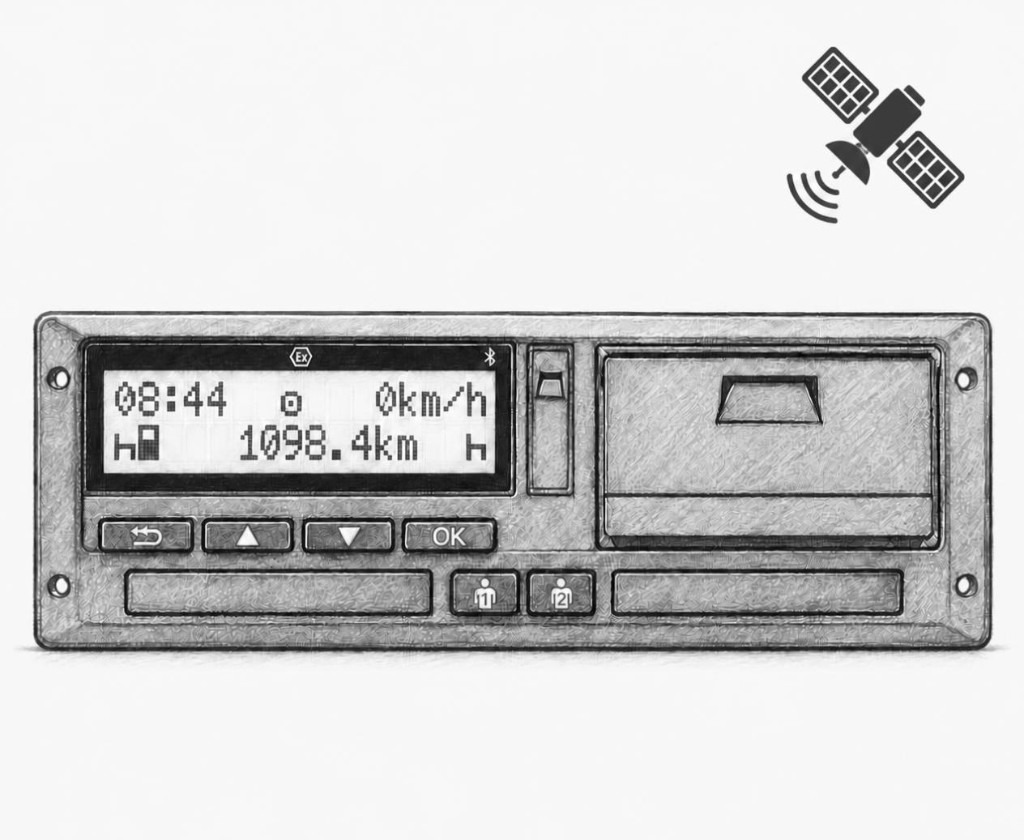
A smart tachograph is the latest generation of digital tachograph. In addition to recording driving and rest times, it adds satellite positioning, remote early detection and a standardised interface with intelligent transport systems. It is governed by Regulation (EU) No 165/2014 and has been mandatory in newly registered vehicles in the EU since 15 June 2019.
There are two versions:
| Version | Mandatory in new vehicles in the EU from | Key difference |
|---|---|---|
| Smart tachograph version 1 (G2V1) | 15 June 2019 | Position recording, remote early detection, intelligent transport systems interface |
| Smart tachograph version 2 (G2V2) | 21 August 2023 | In addition: automatic border-crossing records and load/unload records |
This article explains what a smart tachograph records, what it brings to businesses and drivers, and which deadlines apply in the EU, based on official sources.
What does a smart tachograph record?
A smart tachograph records some of the information that drivers previously had to enter by hand, and provides new data for enforcement.
| Feature | What it does | Version |
|---|---|---|
| Satellite position recording (GNSS) | Automatically records the vehicle's position at the start and end of the daily working period and every 3 hours of accumulated driving time | G2V1 and G2V2 |
| Remote early detection (DSRC) | Transmits a limited set of events from the previous 10 days to enforcement officers by radio, so they can decide which vehicle to stop | G2V1 and G2V2 |
| Intelligent transport systems interface | Allows tachograph data to be passed to external systems such as fleet software through a standardised connection | G2V1 and G2V2 |
| Border-crossing records | Automatically records the moment the vehicle crosses a national border; the record is stored in both the vehicle unit and the driver card | G2V2 only |
| Load and unload records | Records loading and unloading operations entered by the driver, with time and position | G2V2 only |
Remote early detection is a preselection tool: on its own it does not lead to an automatic fine, and a flagged vehicle is still checked at the roadside.
Benefits of the smart tachograph
The main benefit of the smart tachograph is that records are kept with fewer manual entries and more reliably.
For businesses
- Fewer manual records: Position and border crossings are recorded automatically, which reduces the risk of driver errors and omissions.
- Easier proof: Border-crossing and loading records show where work was carried out. This makes it easier to demonstrate compliance with cabotage and driver posting rules.
- Works with fleet software: The standardised interface makes it easier to pass tachograph data to analysis and reporting systems.
For drivers
- Less manual work: Some country and position entries are made automatically.
- More targeted checks: Remote early detection helps enforcement focus on suspicious vehicles.
For enforcement and safety
- More resistant to manipulation: Version 2 offers stronger anti-tampering protection and better software updates.
- Fair competition: More effective enforcement of driving and rest rules protects compliant businesses and improves road safety.
Who needs a smart tachograph?
Every vehicle registered in the EU and used in international road transport must now be fitted with a smart tachograph version 2. The deadlines were introduced step by step:
| Date | What applied |
|---|---|
| 15 June 2019 | Smart tachograph version 1 mandatory in newly registered vehicles |
| 21 August 2023 | Smart tachograph version 2 mandatory in newly registered vehicles |
| 31 December 2024 | Vehicles in international transport with an analogue or non-smart digital tachograph had to be fitted with version 2 |
| 18 August 2025 | Vehicles in international transport with smart tachograph version 1 had to be fitted with version 2 |
| 1 July 2026 | Light commercial vehicles over 2.5 t registered in the EU and used in international transport must have version 2 |
Vehicles used only in domestic transport were not covered by the retrofit deadlines. Driver cards are issued by the competent authority of the Member State where the driver has their normal residence.
Checklist for fleet operators
- Know your fleet: List which tachograph each vehicle has: analogue, digital, smart version 1 or smart version 2.
- Check international vehicles: Every EU-registered vehicle used in international transport needs version 2.
- Check your cards: Track the expiry dates of driver and company cards and apply to your national card-issuing authority in good time.
- Download data regularly: Download driver card and vehicle unit data within the legal periods. See our guide to tachograph download periods.
- Train your drivers: Explain load/unload entries and border-crossing records.
- Check your vans: Light commercial vehicles over 2.5 t in international transport are now in scope. See our article on EU tachograph rules for vans.
All your tachograph data in one place
Tachograph AI brings digital and smart tachograph data together in one dashboard, analyses driving and rest times and reminds you of upcoming download dates. It is suitable for fleets of every size.
Frequently asked questions
What is a smart tachograph?
The latest generation of digital tachograph, which adds satellite positioning, remote early detection and an intelligent transport systems interface. It is governed by Regulation (EU) No 165/2014.
What is the difference between a smart tachograph and a digital tachograph?
In addition to everything a digital tachograph records, a smart tachograph automatically records the vehicle's position and can transmit limited data to enforcement officers remotely. Version 2 also records border crossings and loading and unloading operations.
What is G2V2?
The second version of the smart tachograph. It has been mandatory in newly registered heavy vehicles in the EU since 21 August 2023 and records border crossings automatically.
Is a smart tachograph mandatory?
In the EU, it has been mandatory in newly registered vehicles since 15 June 2019. Every EU-registered vehicle used in international transport must now be fitted with version 2; vehicles used only in domestic transport were not covered by the retrofit deadlines.
Does remote early detection lead to fines?
Not on its own. It is a preselection tool that helps enforcement officers decide which vehicle to stop; a flagged vehicle is still checked at the roadside.
Who issues tachograph cards?
The competent authority of the Member State where the driver has their normal residence.
Official sources
- European Commission — Smart tachograph version 2 and enforcement in international road transport (19 August 2025)
- European Commission — TRACE II Tachograph Enforcement Guidance (Regulation (EU) No 165/2014)
- European Parliament — Tachographs in road transport (Regulation (EU) No 165/2014), summary