EU Tachograph Rules for Vans over 2.5 Tonnes: What Applies from July 2026
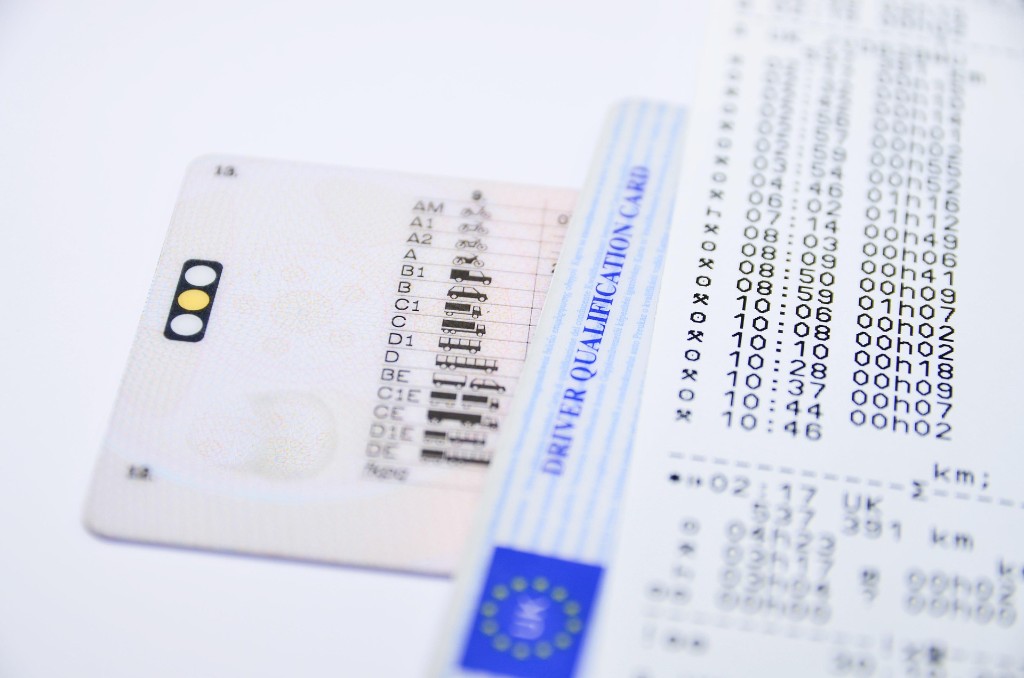
Since 1 July 2026, light commercial vehicles with a maximum permissible mass of more than 2.5 tonnes that are used for international carriage of goods or for cabotage, must be fitted with a smart tachograph. Their drivers are now subject to the same EU driving and rest time rules as lorry drivers.
This article explains which vehicles are covered, which exemptions apply, which driving and rest times must be observed and what fleet operators need to do.
Legal basis
The requirement stems from Regulation (EU) 2020/1054, part of Mobility Package I, which amended the two core EU regulations for road transport:
| Regulation | Subject |
|---|---|
| Regulation (EC) No 561/2006 | Driving times, breaks and rest periods |
| Regulation (EU) No 165/2014 | Tachographs, driver cards and company cards |
Both regulations apply directly and uniformly in all EU Member States.
Which vehicles are covered?
| Vehicle group | Condition |
|---|---|
| Lorries and vehicle combinations | Maximum permissible mass over 3.5 t, carriage of goods |
| Light commercial vehicles | Maximum permissible mass over 2.5 t up to 3.5 t, international carriage of goods or cabotage (since 1 July 2026) |
| Buses and coaches | More than nine seats including the driver, carriage of passengers |
For vehicle combinations, the maximum permissible mass of the combination including the trailer is decisive. The requirement applies to all vehicles in scope regardless of their date of registration, so vehicles already in service must be retrofitted.
Which device is required? Light commercial vehicles that newly fall within the scope must be fitted with a second-generation smart tachograph. Installation and calibration must be carried out by an authorised workshop.
Domestic transport: The new requirement for vehicles between 2.5 t and 3.5 t applies to international transport and cabotage, not to purely domestic transport.
Exemptions
Article 3 of Regulation (EC) No 561/2006 provides exemptions that are particularly relevant for light commercial vehicles, provided that driving is not the driver's main activity:
- Craftsmen's exemption: Vehicles or combinations up to 7.5 t used to carry materials, equipment or machinery for the driver's own work, within a 100 km radius of the undertaking's base.
- Own-account transport: Vehicles between 2.5 t and 3.5 t used for the carriage of the undertaking's own goods, not for hire or reward and not on behalf of third parties.
Whether an exemption applies in an individual case is assessed by the enforcement authorities.
Driving and rest times
| Rule | Limit |
|---|---|
| Daily driving time | Maximum 9 hours; up to 10 hours twice a week |
| Weekly driving time | Maximum 56 hours |
| Driving time over two weeks | Maximum 90 hours in any two consecutive weeks |
| Break | At least 45 minutes after 4.5 hours of driving; may be split into 15 and 30 minutes |
| Daily rest | Regular: at least 11 hours; may be split into 3 and 9 hours |
| Reduced daily rest | At least 9 hours; no more than three times between two weekly rest periods |
| Weekly rest | Regular: at least 45 hours; reduced: at least 24 hours, with compensation |
The regular weekly rest period may not be taken in the vehicle. Transport undertakings must also organise work so that drivers are able to return to the operational centre or to their place of residence within each period of four consecutive weeks.
Records at roadside checks
Since 31 December 2024, drivers must be able to present the records for the current day and the preceding 56 days at roadside checks.
Checklist for fleet operators
- Review your fleet: Which vehicles exceed 2.5 t or 3.5 t maximum permissible mass and operate internationally? Do exemptions apply?
- Retrofit tachographs: Have a smart tachograph installed and calibrated by an authorised workshop, then activate the company lock with your company card.
- Apply for cards: A company card for the undertaking and a personal driver card for each driver.
- Train drivers: Tachograph operation, manual entries and driving and rest time rules.
- Download data regularly: Driver cards at least every 28 days, vehicle units at least every 90 days.
- Analyse infringements: Review records regularly and discuss deviations with drivers.
Keep deadlines and infringements in view
tachograph.ai stores driver card and vehicle unit data in one place, analyses driving and rest times under Regulation (EC) No 561/2006 and reminds you of upcoming downloads. Pricing is independent of the number of vehicles, so additional vans can be added at no extra cost.
Frequently asked questions
Do vans over 2.5 tonnes need a tachograph?
Yes, if they are used for international carriage of goods or for cabotage and no exemption applies. This requirement has applied since 1 July 2026.
Does the requirement apply to domestic transport?
No. The requirement for vehicles between 2.5 t and 3.5 t applies to international transport and cabotage, not to purely domestic transport.
Which tachograph is required for vans?
A second-generation smart tachograph. Installation and calibration must be carried out by an authorised workshop.
Do older vans need to be retrofitted?
Yes. The requirement applies to all vehicles in scope regardless of their date of registration.
Are there exemptions for craftsmen?
Yes. Vehicles up to 7.5 t used to carry materials, equipment or machinery for the driver's own work within 100 km of the undertaking's base are exempt, provided that driving is not the driver's main activity.
Which records must a driver present at a roadside check?
Since 31 December 2024, the records for the current day and the preceding 56 days.
Official sources
- European Labour Authority (ELA) — Light commercial vehicles from 1 July 2026
- EUR-Lex — Regulation (EU) 2020/1054 (Mobility Package I)
- EUR-Lex — Regulation (EC) No 561/2006
- EUR-Lex — Regulation (EU) No 165/2014
- EUR-Lex — Tachographs in road transport (summary)